




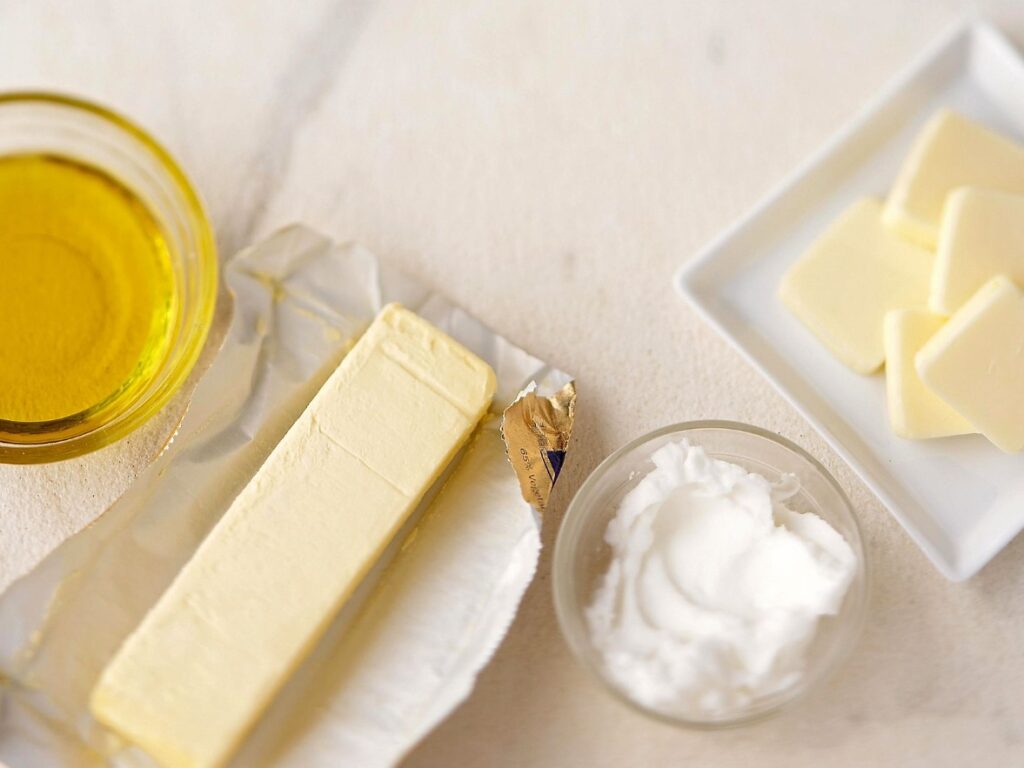
Technical Issues in the Production of Fat Spread – Water-in-Oil (W/O) Emulsion
The formation of W/O emulsions requires very controlled interfacial tension and fat crystallization. The production and storage of plant-based spreads and butter alternatives require the choice of a proper margarine emulsifier.
Basic Physics behind Stability of Water-in-Oil Emulsion
Dispersion of aqueous drops in the lipid system needs distinct surfactant science as well as water-in-oil stabilizers.
- Interfacial Barrier: Absence of a proper stabilizer will cause the merger of water drops with phase separation and thus lead to instability of margarine emulsion.
- Heat Resistance: Variations in heat cause the melting of fat crystals and thus separation of oil and moisture.
- Vegetable Oil: Unsaturated vegetable oil decreases crystallization; hence, a special emulsifier is needed for margarine and shortening.
Major Formulation Issues in Today’s Margarines and Spreads
Physical problems in the processors occur during continuous vacuum processing and storage.
- Bleeding of Water (Syneresis): Improper interfacial films cause bleeding of moisture during cold storage.
- Splashing During Frying: Cohesive water drops break while frying in the pan.
- Coarse Structure: Irregular crystallization leads to a coarse structure.
About Raize: Engineering High-Performance Food Emulsifier Solutions
Raize Chemical is a reputable additives manufacturer from China with over 15 years of industry experience.
- Global Quality at Direct Price: We provide high-purity food emulsifiers of global standards at direct prices in over 50 countries.
- Flexible Partnership Policies: We help manufacturers with no MOQ policies and tailor-made solutions.
- Full-fledged Service: COA/TDS/MSDS, free samples <500g and 15-20 days delivery period.
Comparing Emulsifiers: GMS, DMG, and PGE
Selecting the right margarine emulsifier requires evaluating surfactant purity, HLB values, and crystallization behavior. Understanding GMS, DMG, and PGE at the W/O interface helps manufacturers optimize margarine emulsion stability and processing performance.
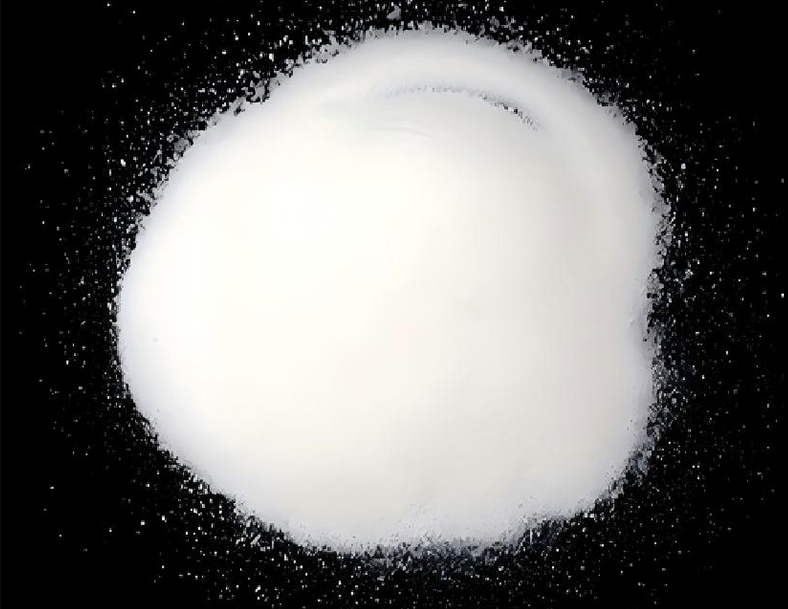
Technical Profile of GMS Emulsifier for Margarine (E471)
Glycerol Monostearate (GMS E471) is a traditional emulsifying agent commonly used in industrial baking and fats.
- Versatility of Grades: Available in GMS 40, 45, 52, and 60 grades.
- Viscosity of Melt: Reduces the viscosity of the melt, assisting in dispersion of fat while mixing.
- Economical Base Emulsifier: Acts as an economical base emulsifier for margarine spreads.
Distilled Monoglycerides E471 (DMG) for High-Fat & Bakery Spreads
Distilled monoglycerides E471 represent a concentrated monoglyceride containing over 90% active mono-esters.
- High Interfacial Activity: Adsorbs rapidly onto water droplets, forming a protective film.
- Syneresis Prevention: Prevents water weeping in low-fat spreads and functions as a food emulsifier for bakery fats.
- Target Application: A high-efficiency DMG emulsifier for margarine that extends emulsion stability.
Polyglycerol Esters of Fatty Acids E475 (PGE) for Specialized Emulsification
Polyglycerol esters of fatty acids E475 have the property of using a polyglycerol base, which allows for adjustable HLB values.
- Heat and Acid Stability: Stable to heat and acid conditions, thus suitable for spreadable applications.
- Aeration and Volume: Facilitates the incorporation of air into the shortening for whipping purposes.
- Synergy: Acts as a synergistic PGE emulsifier for margarine along with monoglycerides.
Comparative Analysis: GMS vs DMG vs PGE Emulsifier Performance
The evaluation of different functional properties of monoglyceride and polyglycerol ester makes it possible to identify the unique applications of each group.
- GMS vs DMG Emulsifier: GMS stabilizes the dispersion, while DMG (E471) exhibits double the surface activity of monoglyceride.
- DMG vs PGE Emulsifier: DMG attaches water molecules, while PGE inhibits crystal growth.
- E471 vs E475 Emulsifier Synergy: Using E471 and E475 results in a two-fold emulsifying action, which eliminates phase separation.
Texture and Mouthfeel: Controlling Crystal Growth and Spreadability
Achieving smooth spreadability directly from refrigeration requires precise fat crystallization control. Emulsifiers act as crystal habit modifiers to maintain desirable lipid polymorphism.
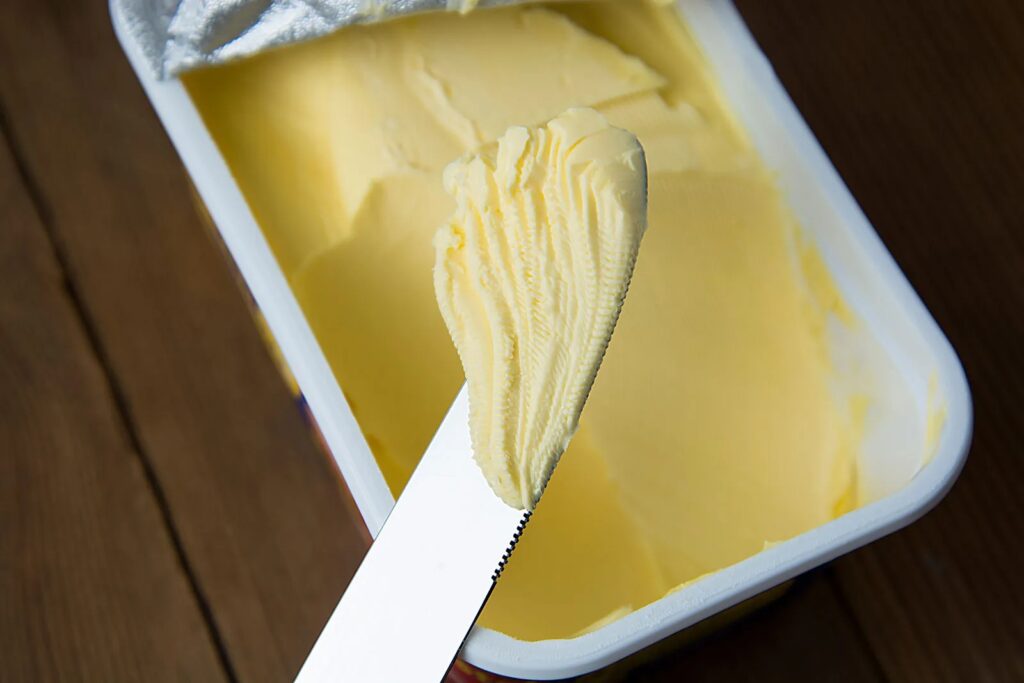
Fat Crystal Modification in Shortening and Bakery Fats
The process involves emulsifiers co-crystallizing with the triglycerides in order to provide proper crystal nucleation during the cooling process.
- Beta Prime Stability: The shortening emulsifier is unique in stabilizing fats in beta prime crystals.
- Prevention of Graininess: Prevents transition to coarse beta crystals, hence eliminating the grainy texture.
- Improved Aeration: Allows better air retention in the batter, thus giving soft bakery products.
Enhancing Spreadability Across Thermal Shift Scenarios
Temperature stability with respect to consistency is crucial for the plant-based alternative to butter.
- Cool Room Softening (4ºC): Interferes with triglyceride arrangement, guaranteeing soft consistency immediately upon removing the butter from the refrigerator.
- Ambient Stability (25ºC): Ensures that no oil splitting or breakdown takes place under the influence of warm temperatures.
- Pleasant Mouth-Melting Texture: Provides appropriate melting characteristics and immediate melt without any greasiness.
Process Optimization: Emulsifier Selection for Continuous Votator Lines
Industrial margarine production relies on continuous scraped-surface heat exchangers operating under high shear. Selecting mechanically resilient emulsifiers for margarine and shortening ensures consistent processing performance.
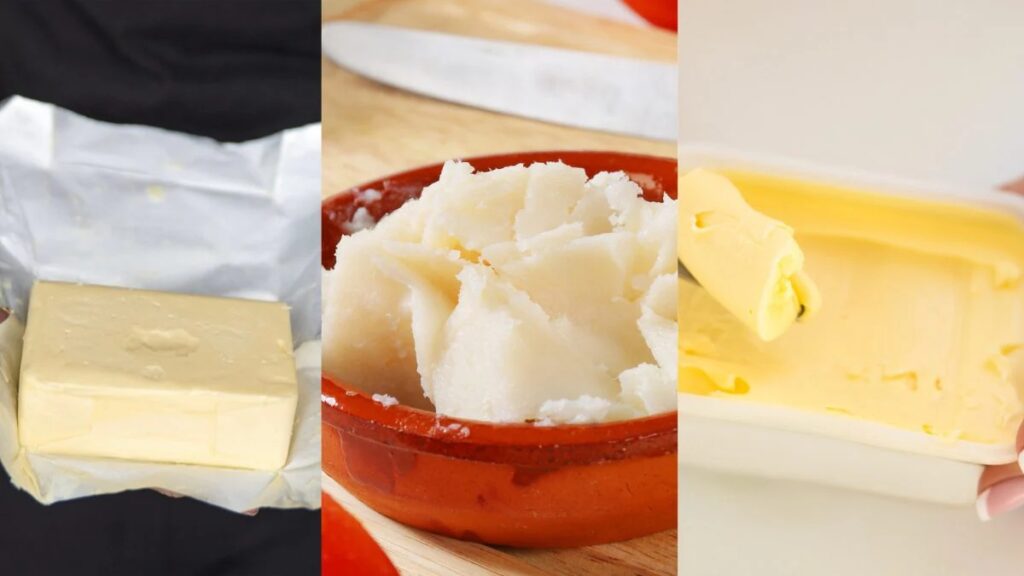
Shear Resistance and Phase Inversion Prevention in Scraped-Surface Heat Exchangers
The high level of mechanical shear within votator equipment can break down water-in-oil emulsions.
- Robust Interfacial Barrier: DMG E471 provides a strong protective film, not affected by mechanical shear.
- Phase Inversion Protection: Helps avoid degradation of W/O spreads to O/W emulsions.
- Consistency of Line Performance: Consistent crystallization assures even moisture distribution through the process line.
Formulating for Clean Label and Plant-Based Butter Alternatives
The food manufacturers need to have pure vegetable ingredients that are not genetically modified and that ensure maximum process efficiency while minimizing the cost of raw materials.
- Vegetable Source: The Raize food emulsifiers are manufactured using vegetable oil sources that are safe.
- Dosage efficiency: High purity makes sure that minimal amounts of the emulsifier (0.2% to 0.5%) are used thus lowering the cost of raw material.
- Blend solutions: Raize provides blended emulsifier solutions for bakery fat processing.
Custom Food Emulsifier Solutions from Raize
Superior stability and heat resistance of margarine emulsions are contingent upon the appropriate combination of lipids and process parameters. Raize provides global food manufacturers with quality margarine emulsifiers and reliable services.
Why Global Food Processors Partner with Raize
Raize offers a combination of high-quality products and customer-focused business policies to ensure maximum value.
- Matching International Quality: The Raize GMS, DMG, and PGE emulsifiers offer international performance at direct rates.
- Technical and Document Assistance: Datasheets related to COA, TDS, and MSDS are available from our experts.
- Flexible Global Logistics: Enjoy advantages including no MOQ, free samples (below 500g), and 15–20 days delivery time.
Elevate Your Spread Formulations Today
Upgrade your spread formulations with high-efficiency emulsification solutions engineered for modern processing lines.
- Request Free Laboratory Samples: Test Raize GMS, DMG, or PGE emulsifiers with complimentary sample kits up to 500g.
- Contact Our Formulation Experts: Connect with Raize Chemical at elma@raizechem.comor +86-13567125417 for quotations and technical datasheets.
FAQ
Q: What triggers water exudation (syneresis) in reduced-fat margarine spreads, and how do formulators combat this problem?
A: Weeping is triggered by the rupture of interfacial films that surround aqueous drops due to capillary pressure. To avoid syneresis, formulators use Distilled Monoglycerides (DMG E471) or a blend of DMG and Polyglycerol Esters (PGE E475).
Q: How do food emulsifiers impact crystal habit change in baking shortenings used in industry?
A: During cooling, emulsifiers co-crystallize with triglycerides, slowing crystal formation and delaying the transition of fine beta-prime crystals into larger beta polymorphs. Crystal habits are maintained to give an optimal plasticity in the formation of batters in bakery shortenings.
Q: What are the distinct differences between the E471 (DMG) and the E475 (PGE) emulsifiers in vegetarian spreads?
A: The difference is that E471 is a lipophilic monoglyceride, where its primary functionality is immobilization of water drops and softening of crumb. PGE (E475) has polyglycerols, which enable wider flexibility in HLB values, besides aeration and stability.
Q: What strategies do food producers adopt to ensure emulsion stability during refrigeration and temperature changes?
A: Food producers adopt a dual emulsifier approach that involves using high-quality DMG E471 and PGE E475. The dual emulsifier approach ensures stability of the dispersed water droplets as well as breaking up the tightly packed solid fats.


Post Comment