





In today’s food production world, what sets a standout item apart from a failed run often comes down to small amounts of a key helper substance. Think about creating a non-dairy milk that stays mixed without breaking apart. Or consider running a large-scale bread operation where the inside texture stays even across every piece. In these situations, how well the blending step works controls your earnings and how customers see your brand.
At Raize, we see emulsifiers as more than simple parts of a recipe. They serve as practical aids built to handle particular issues in how food elements act together. This guide looks at how picking the proper blending method can change the way your factory performs.
Core Mechanisms: Beyond Surface Tension
Factory managers who want to improve their setup need to go past the simple idea of what an emulsifier does. Good blending relies on exact links between tiny particles. These links decide how long the finished good holds up and how it feels and tastes to users.
Reducing Interfacial Tension for Stability
The main job of an emulsifier involves keeping the boundary between oil and water steady. That boundary can shift quickly in fast factory mixing. The rate at which the emulsifier moves to this spot matters a great deal. If the helper works too slowly, droplets join up in a process known as coalescence. This often results in throwing out the entire batch. Raize offers very pure surfactants. They bring quick steadiness to the boundary. In this way, they lower the power needed for blending and also stop the need for expensive do-overs on batches.
Improving Starch Complexing in Bakery
Products loaded with starch call for emulsifiers to perform tasks that reach further than just joining oil and water. These helpers connect with amylose. They create groups that slow down the staling process, called retrogradation. For those making goods, this plays a key role. It helps lengthen the period when items seem fresh. At the same time, makers can hold to basic ingredient lists and the feel that buyers want, without any trade-offs.
Enhancing Production Efficiency with High-Performance Emulsifiers
When checking how food-making runs, people measure output levels and how steady the outcomes remain. The right add-in cuts the time spent on mixing. It also builds recipes that stand up better to changes.
Optimizing Texture in Dairy and Beverages
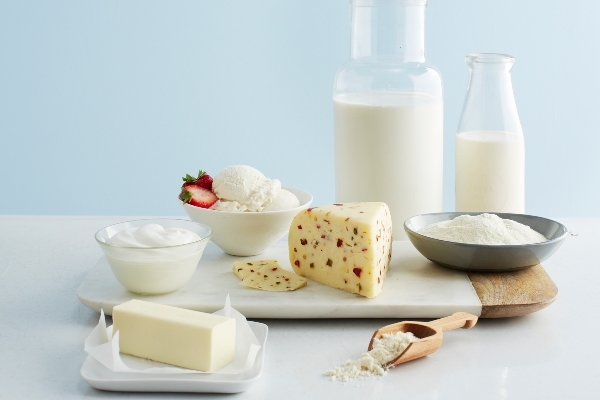
Beverage makers aim to avoid solids settling at the bottom and fats rising to create rings on the surface.
- PGE (Polyglycerol Esters of Fatty Acids E475): It works strongly in milk products and drinks with added protein. Raize’s PGE E475 helps blend dairy fats well. It stops thick ice bits from forming in frozen treats.
- Application Scene: Plant milks high in protein face settling during heat processing, like UHT. PGE fixes this by keeping proteins in place. The result is an even texture when sipped and a steady color from start to end of the bottle.
Aeration and Volume in Bakery Solutions
Bread and cake producers deal with dough that shifts and sizes that vary in big runs.
- DATEM (Diacetyl Tartaric Acid Esters of Mono and Diglycerides E472e): People know it for boosting gluten strength. Raize’s DATEM E472e raises how well dough handles machine bumps.
- SSL (Sodium Stearoyl Lactylate E481): It links to proteins in flour. This boosts water uptake and makes dough more flexible.
- Solving the Problem: Lines that see loaves sink or uneven insides can benefit from mixing SSL and DATEM. They build up the protein structure. Higher rise follows, along with a tender feel that holds during machine slicing and boxing.
Overcoming Common Industrial Processing Hurdles
Large food operations face many changing factors in their surroundings. Strong add-ins work like cushions against these ups and downs.
Preventing Fat Bloom in Confectionery
Chocolate and similar covers suffer from fat bloom, a white, dusty look that triggers large recalls.
- SMS (Sorbitan Monostearate E491): Raize’s SMS handles how fats turn to crystals.
- Application Scene: In chocolate covers, SMS spreads oils and fats better. It gives a shiny surface and crisp break that survives the path to stores. Plus, it counters dull spots from heat changes in shipping.
Solving Oil Separation in Spreadables and Meat
- DMG (Distilled Monoglyceride E471) & GMS (Glycerin Monostearate): They pull heavy duty in handling fats and oils.
- Peanut Butter & Margarine: Peanut butter lines use Raize DMG (E471) for a smooth feel and no oil on top. It cuts wait time for setting, which boosts daily output by up to 20 percent in some setups.
- Meat Processing: Sausages and canned meats mix fat and water more easily with GMS. It avoids an oily feel and keeps juiciness after heating, based on years of field tests in processing plants.
Why Leading Manufacturers Partner with Raize
Raize stands as a top maker of custom chemical helpers for plastics, foods, and feeds. From our spot in Hangzhou, we focus on clean food emulsifiers that match strict global rules, including E-codes.
We shine in providing steady quality on par with big-name suppliers, yet at prices that fit ongoing needs. Our 15-plus years in the field mean our pros offer real guidance. They help blend our add-ins into your current mixes smoothly. This applies whether you work on better ice cream swell or firmer quick noodles, drawing from hands-on know-how across hundreds of client runs.
Conclusion
Blending stands as the quiet driver behind food-making speed. Choosing pointed helpers like Raize’s GMS, SSL, and PGE lineup lets producers trim waste. Shelf life grows longer. Item standards rise, too. In times when production minutes add up fast, the correct particle match in your base becomes essential, not optional.
Ready to optimize your production line?
Contact Raize today for technical data sheets (TDS), COA, or to request a free 500g sample to test in your next R&D trial. Our experts are ready to help you solve your toughest processing challenges.
- Email: elma@raizechem.com
- WhatsApp: 0086-13567125417
FAQ
Q: Why is my bread staling faster even though I use preservatives?
A: Preservatives only stop mold; they don’t stop starch retrogradation. To keep bread soft, you need emulsifiers like Raize SSL or DMG, which complex with starch to maintain moisture and crumb flexibility over time.
Q: Can I use the same emulsifier for both oil-in-water and water-in-oil emulsions?
A: Generally, no. Every emulsifier has an HLB (Hydrophilic-Lipophilic Balance) value. For example, SMS is better for fat-heavy systems, while SSL or PGE are more effective in water-based beverage or dairy systems.
Q: How do emulsifiers affect the cost-efficiency of my production line?
A: High-quality emulsifiers reduce “batch failure” rates, allow for faster mixing speeds, and can sometimes enable the reduction of more expensive ingredients (like fats or eggs) without losing texture.
Q: Are there naturally derived options for industrial emulsifiers?
A: Most modern industrial emulsifiers, like those produced by Raize, are derived from vegetable oils (such as palm or soybean oil), making them suitable for a wide range of dietary requirements while providing the high-performance consistency needed for automation.

Post Comment