




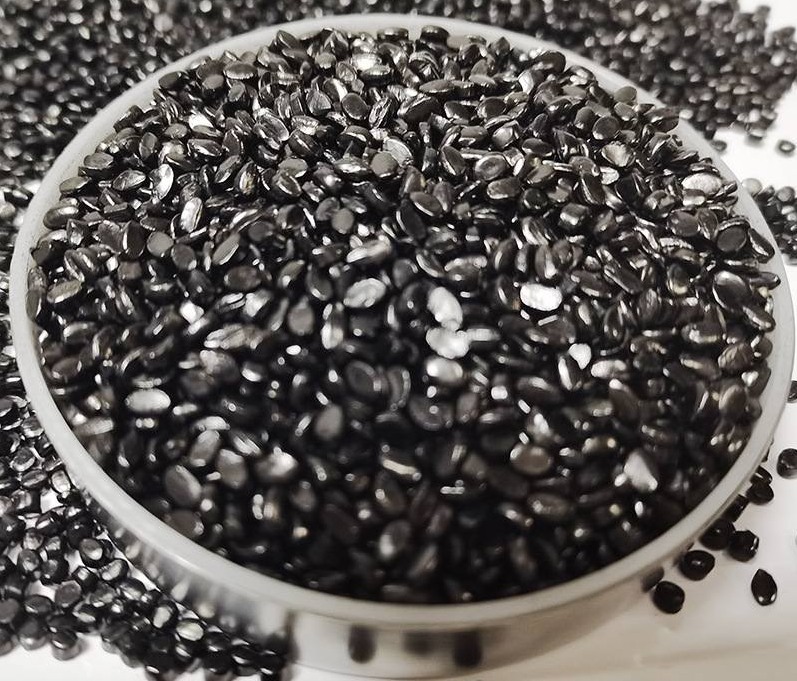
The Thermal Performance Challenge in Modern Building Insulation
Architects and structural engineers deal with tough global energy rules that push for lower thermal conductivity in EPS building insulation envelopes. Conventional expanded polystyrene (EPS) has worked as a basic material for years, but hitting modern zero-emission standards with standard white foam often calls for insulation layers that prove too thick in practice.
The Rise of High-Efficiency Insulation Requirements
Modern construction counts on thin yet strong thermal barriers. These barriers help gain more indoor space and cut down on the overall weight of the building.
- Strict Carbon Footprint Standards: Energy codes push building envelopes to cut heat loss. This creates demand for materials that deliver very low grey EPS thermal conductivity (λ-value).
- Space Constraints in Urban Architecture: Thicker insulation panels reduce usable floor area and call for longer, costly mechanical fasteners. This drives interest in high-performance grey EPS insulation solutions.
The Bottleneck of Traditional White EPS
While conventional white EPS cuts heat transfer through trapped air pockets, grey EPS vs white EPS shows that traditional white foam still lets radiative heat transfer pass through easily.
- Uninhibited Infrared Radiation: Standard polystyrene polymer walls stay mostly open to thermal radiation across the infrared range.
- Diminishing Returns on Density: Raising density in white EPS brings only small thermal gains. It also pushes up raw material costs compared to using a high-efficiency grey EPS masterbatch.
To overcome these physical limitations, material scientists look to specialty EPS resin additives—specifically high-purity grey EPS masterbatch engineered by a leading grey EPS masterbatch manufacturer like Raize—to fundamentally change how heat moves through expanded foam.
The Science of Thermal Efficiency: Grey EPS vs White EPS
Understanding why a grey EPS insulation board yields a significantly higher EPS insulation R-value requires examining heat transfer physics inside closed-cell structures.
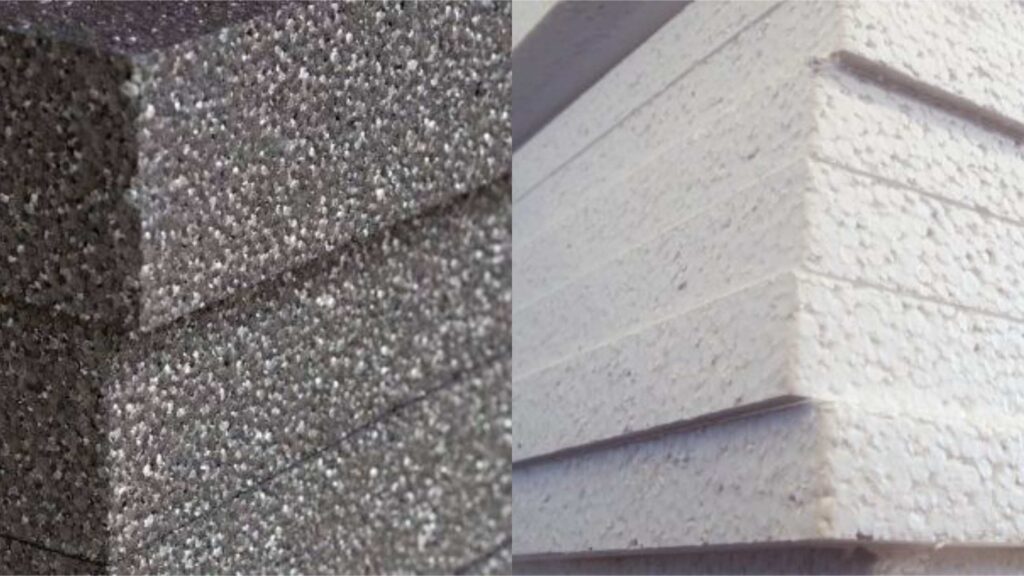
Mechanisms of Heat Transfer in Polymeric Foams
Total thermal conductivity within expanded polystyrene is governed by three primary pathways:
- Solid/Gas Conduction: Heat passing through the polymer matrix and the trapped blowing agent/air.
- Cellular Convection: Circulation of gas within individual closed cells (minimal in micro-cellular EPS).
- Radiative Heat Transfer: Infrared radiation passing directly through cell walls from the warm side to the cool side.
Infrared Attenuation via Carbon Black Masterbatch
Introducing a specialized carbon black masterbatch for EPS directly combats radiative heat transfer.
- Absorbing and Reflecting Thermal Rays: Fine carbon black particles drive effective infrared attenuation, acting as infrared absorbers and reflectors that scatter thermal radiation across millions of micro-cells.
- Significant Thermal Conductivity Reduction: Adding carbon black drops the grey EPS thermal conductivity from typical white foam levels (≈038 W/m∙ K) down to ≈ 0.031 W/m ∙ K.
- Up to 20% Higher R-Value: Achieving the same thermal insulation performance requires up to 20% less raw material thickness, yielding a far superior grey EPS R-value.
| Feature / Metric | Conventional White EPS | Grey EPS (with Carbon Masterbatch) |
| Primary Insulation Mechanism | Trapped static air conduction | Static air + Infrared Attenuation |
| Typical Thermal Conductivity ($\lambda$) | ~ 0.036 – 0.038 W/m ∙ K | ~ 0.030 – 0.032 W/m ∙ K |
| Required Board Thickness | Standard Baseline | Up to 20% Thinner |
| Radiative Heat Blocking | Low | High |
Industrial Integration: Processing Advantages of Raize Grey EPS Masterbatch
Adding functional EPS resin additives into polystyrene can complicate raw resin production. Raize formulates specialized EPS masterbatch solutions designed to integrate seamlessly into existing chemical polymerization workflows.
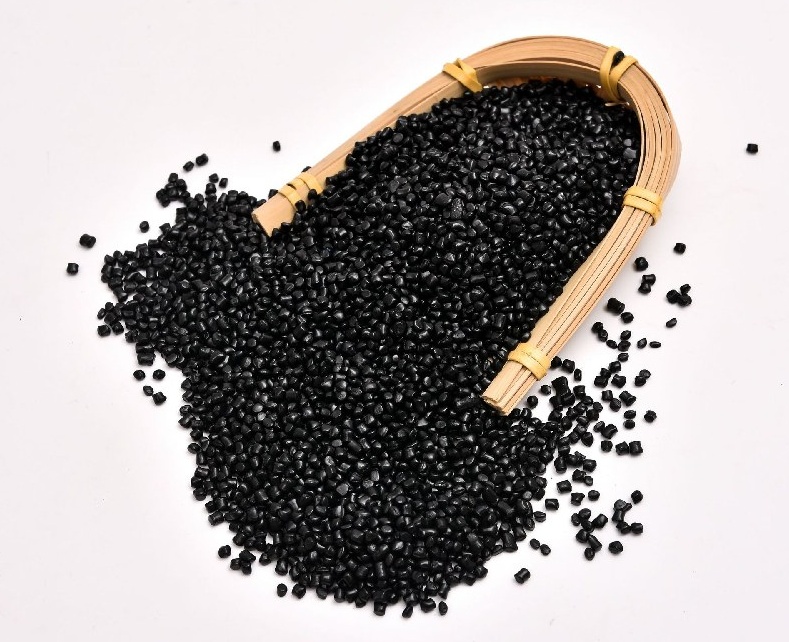
Dispersion and Chemical Stability in Polymerization
Incorporating a carbon black masterbatch for EPS into the EPS suspension polymerization system without disturbing reaction kinetics requires careful masterbatch design.
- High-Purity Carrier Matrix: Utilizing a tailored PS carrier (60% PS / 40% high-purity carbon black formulation), the grey EPS masterbatch dissolves rapidly in styrene monomer (SM).
- Uncompromised Polymerization Systems: It maintains a stable reaction system during EPS suspension polymerization without affecting polymerization speed or bead particle size distribution.
Consistent Bead Formation and Environmental Safety
Formulations must balance thermal gains with downstream processing ease, bead quality, and plant safety.
- Homogeneous Carbon Black Dispersion: Ensures uniform dispersion within the final expanded beads, eliminating dark streaks or weak cell structures.
- Low Dosage Efficiency: A general dosage rate of 5% to 7% grey EPS masterbatch achieves ideal infrared attenuation without degrading mechanical strength.
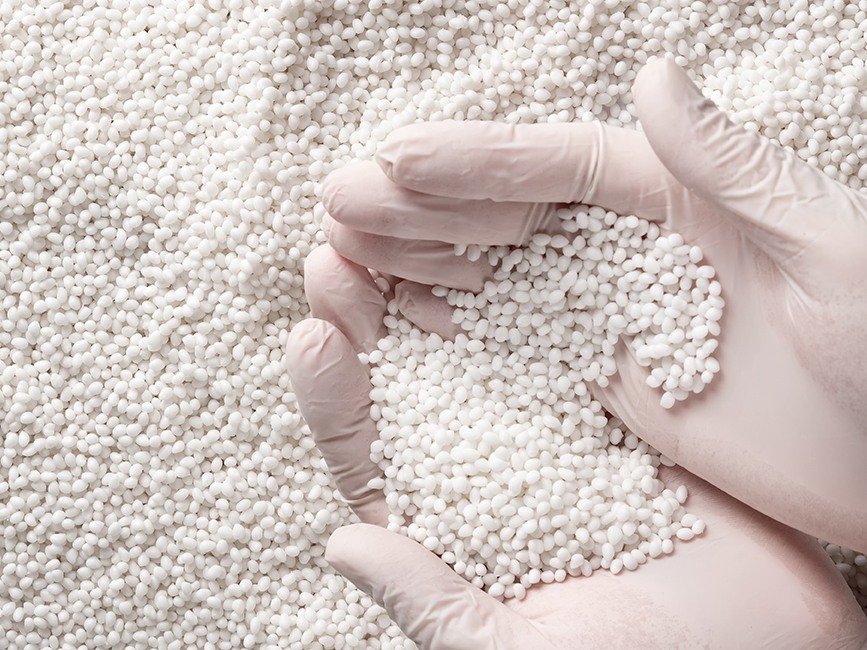
- Clean Handling: Supplied in dust-free granular form (25kg kraft paper packaging with inner PE liner), preventing airborne contamination during batching.
End-Use Applications: Where Grey EPS Delivers Maximum Value
Upgrading from standard white foam to high-performance grey EPS insulation opens up high-value opportunities across critical EPS building insulation sectors.
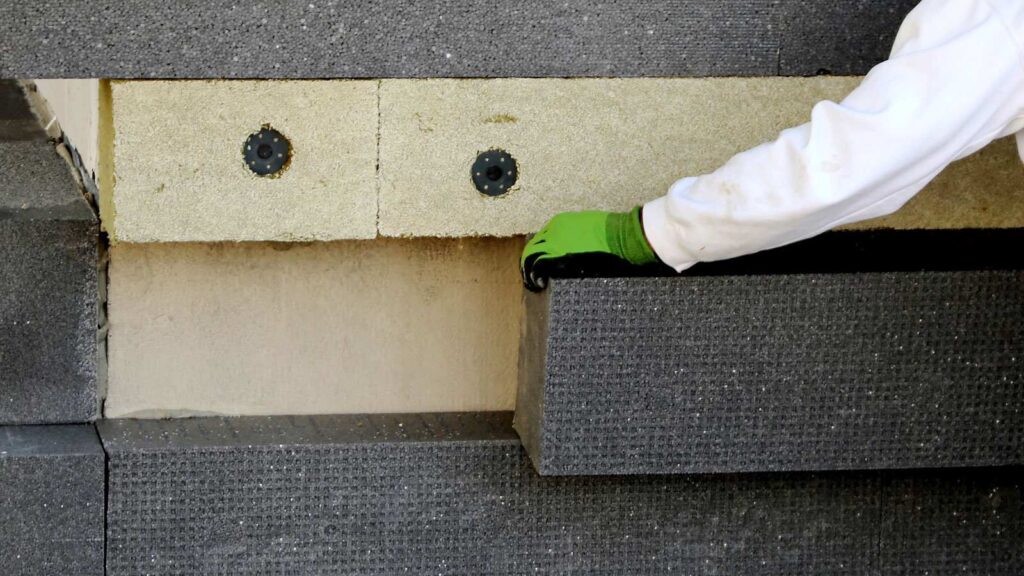
External Thermal Insulation Composite Systems (ETICS)
Façade insulation relies on high thermal performance within tight physical margins.
- Solves Space Limitations: Thinner grey EPS insulation board panels fit easily within tight urban lot lines and complex window reveal details.
- Reduces Fastener Lengths: Lighter, thinner panels require shorter mechanical anchors, reducing cold bridging across the grey EPS insulation layer.
Passive Houses and Energy-Efficient Roof/Floor Insulation
Heavy-duty load-bearing insulation demands high mechanical strength alongside top-tier thermal efficiency.
- Under-Slab & Foundation Insulation: Maintains optimal grey EPS R-value and thermal resistance under high compression, preventing heat loss to the ground.
- Flat Roof Insulation Systems: Keeps roof profiles lower while meeting demanding local EPS building insulation guidelines.
Elevate Your EPS Thermal Specifications with Raize
As a premier grey EPS masterbatch manufacturer, Raize provides high-performance EPS resin additives, tailored EPS masterbatch products, flame retardants (such as FR130), and coating agents to optimize every stage of foam production.
If you are looking to upgrade your EPS resin line, achieve better EPS insulation R-value performance, and deliver high-efficiency grey EPS insulation foam at competitive production costs, partner with our technical team.
Ready to optimize your EPS resin line? Contact Raize today to request a free product sample (up to 500g) and technical data sheets!
FAQ
Q: How does carbon black improve the R-value of expanded polystyrene foam?
A: A specialized carbon black masterbatch for EPS acts as an infrared absorber and reflector within the micro-cell structure. By driving effective infrared attenuation to block radiative heat transfer—which freely passes through white foam—it significantly lowers overall grey EPS thermal conductivity, resulting in a far superior grey EPS R-value per inch.
Q: Does adding grey masterbatch affect the suspension polymerization process during EPS resin production?
A: High-quality grey EPS masterbatch formulations made with an optimized polystyrene carrier rapidly dissolve in styrene monomer. They maintain reaction stability and particle size distribution during EPS suspension polymerization without interfering with polymerization kinetics.
Q: What is the typical addition rate of grey masterbatch for achieving standard thermal conductivity targets?
A: A dosage of 5% to 7% grey EPS masterbatch is typically sufficient to achieve optimal infrared attenuation and lower thermal conductivity (λ ≈ 0.031 W/m ∙ K) without compromising the mechanical integrity of the foam beads.
Q: Can grey EPS insulation boards achieve the same fire safety standards as traditional white EPS foam?
A: Yes. A grey EPS insulation board utilizes standard EPS resin additives such as polymeric FR130 alongside carbon masterbatches to satisfy international building codes for fire retardancy.

Post Comment