




Understanding Pre-Blended Synergistic Antioxidants for Polyolefin Processing
Selecting the proper combination of polymer processing antioxidants is very critical. It ensures that heat stability is maintained. It also guarantees melt quality when plastic is being produced. The current text examines the interaction between a combination of primary and secondary antioxidants. It will assist manufacturers in selecting between antioxidant 225 and antioxidant 215.
Overview of Pre-Blended Synergistic Antioxidants in Polyolefin Processing
Plastics are subjected to harsh conditions such as high temperatures, extrusion, molding, and mixing.
- Destructive Effects: Without any protection, the raw plastics may undergo chain breaking or improper linking. This results in drastic variations in Melt Flow Index (MFI). Yellowing and decreased strength of the products are observed.
- Interaction: A pre-blended antioxidant system captures the damaging free radicals while at the same time destroying dangerous hydroperoxides. This way, multistage protection is assured.
- Increased Efficiency: A mixed phenolic phosphite antioxidant blend prevents any possible problems related to individual component additions. Also, it ensures even distribution in order to protect the molten plastic effectively.
Raize: Reliable Manufacturer of Polyolefin Additive Solutions
Райзе is a global maker with over 15 years of deep experience. The company makes great additives for plastics, food, and animal feed.
- Quality Check: Raize follows strict ISO9001 rules. The factory promises steady quality in every batch. They ensure low gas release for every compound antioxidant for plastics.
- Global Reach: Raize helps buyers in over 50 countries. They supply very pure materials that meet global standards. Their prices remain highly competitive.
- Full Support: Raize gives special technical help. They offer different packaging choices. They also ship their polyolefin processing stabilizer products quickly.
Chemical Composition: Breaking Down AO 225 vs. AO 215 Formulations
You need to know the exact makeup of an antioxidant blend for polyolefins. This helps you guess how it will block heat damage during work.
Active Component Breakdown: Phenolic AO 1010 and Phosphite AO 168
Both antioxidant 225 and antioxidant 215 use the common 1010/168 antioxidant blend makeup. This gives the best defense.
- Main Part (Antioxidant 1010): This is a heavy phenolic protector. It acts to catch bad radicals. It traps them during long periods of heat aging.
- Second Part (Antioxidant 168): This is a phosphite helper. It reacts with harmful hydroperoxides made during melting. It turns them into safe, harmless matter.
- Working Together: The phenolic phosphite antioxidant blend stops fast plastic breakdown. It works much better than using just one chemical alone.
Ratio Comparison: 1:1 Blend in AO 225 vs. 1:2 Blend in AO 215
The main difference between Antioxidant 225 vs 215 is the mixture proportion. This changes the proportion of radical scavengers and melt stabilizers.
- Antioxidant 225 Mixture (1:1): This mixture contains equal proportions of Antioxidant 1010 (50%) and Antioxidant 168 (50%). This gives balanced protection against high heat stability and rapid melting stability.
- Antioxidant 215 Mixture (1:2): The mixture consists of 33.3% Antioxidant 1010 and 66.7% Antioxidant 168. It places more emphasis on the protection of melt flow during very high processing temperatures.
- Custom Mixtures: This change in proportion allows for adjustment of safety grade according to the plastic material and the equipment operating temperatures.
Performance Differences: Processing Stability vs. Long-Term Thermal Stability
Picking between antioxidant 225 and antioxidant 215 takes some thought. You must decide if your main problem is inside the machine or during the final item’s daily use.
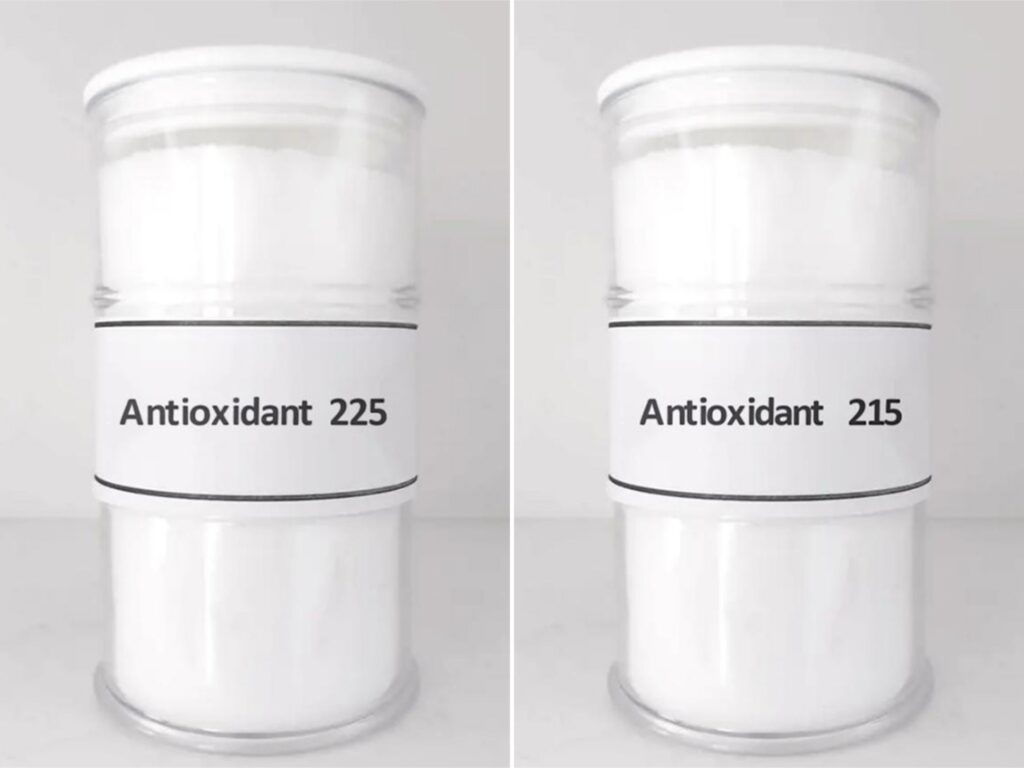
Antioxidant 215: Superior Polyolefin Processing Stabilizer for High-Shear Conversion
Antioxidant 215 has more phosphite in it. It works great as a top polymer processing antioxidant. It is also an amazing polyolefin processing stabilizer.
- Flow Control: It stops the thickness drop in polypropylene caused by broken chains. It also controls unwanted thickening in polyethylene.
- Stopping Yellow Color: It strongly blocks color changes. It stops heat yellowing during hard extrusion, recycling, or long heating times.
- Tough Mixing Defense: It is perfect for hot mixing and recycling. It also helps in film blowing where bad hydroperoxides build up fast.
Antioxidant 225: Long-Term Thermal Stability for High-Temperature End-Use
Antioxidant 225 has an even amount of phenolic parts. It provides better long-term heat safety. It helps items that face high heat throughout their entire life.
- Longer Life: It keeps the pulling strength and impact toughness high. It saves the surface quality during long heat exposure in final uses.
- Low Loss: The high phenolic amount means very little material boils away. It stays put in tough industrial jobs.
- Two-Way Action: It gives good early melt safety during molding. It also keeps a strong reserve for later heat defense.
Application Matrix: Direct Comparison Across Polymer Resins
You must pick the right compound antioxidant for plastics or a polyolefin antioxidant blend carefully. It depends on the base plastic, factory conditions, and final use setting.
Resin Compatibility Table for Antioxidant Blends
The table below shows the best mix choice. It looks at the plastic type and specific safety needs.
| Polymer Resin | Recommended Blend | Primary Processing Benefit | Typical Degradation Issue Solved |
| Polypropylene (PP) | Антиоксидант 215 | Great MFI control during hot extrusion | Chain breaking, weak parts, and early yellowing |
| Polypropylene (PP) | Антиоксидант 225 | Long heat life in car and home goods | Loss of strength during long heat exposure |
| Polyethylene (PE – LLDPE/HDPE) | Антиоксидант 215 | Stops bad bonding in pipes and films | Gel spots, thick melt, and rough surfaces |
| Ethylene-Vinyl Acetate (EVA) | Антиоксидант 225 | Low gas loss during hot mixing | Heat yellowing and breakdown during storage |
| Engineering Plastics (ABS/PS) | Антиоксидант 225 | High heat safety and low color change | Surface damage and color shifts under heat |
Application Scenarios and Practical Degradation Solutions
Using a specific antioxidant blend for polyolefins fixes bad factory defects. It helps real-world plastic production a lot.
- Polypropylene Fiber and Film: antioxidant 215 for polypropylene is a very effective antioxidant for polypropylene. It stops broken fibers and sudden MFI jumps. These issues come from hard stress in fast spinning machines.
- Polyethylene Pipe Making: antioxidant 215 for polyethylene works as a great antioxidant for polyethylene. It stops gels and rough walls. These happen from unwanted bonding during constant pipe making.
- Car Engine Parts: Antioxidant 225 for polypropylene promises strong parts. It stops heat damage in very hot engine areas.
Conclusion & Raize Supply Advantage
Finding the right balance between factory safety and long heat life is key. It boosts plastic quality and makes more money.
Cost-Effective Raize RZAT225 and RZAT215 Supply Options
Raize sells top-grade Antioxidant 225 and Antioxidant 215 polyolefin antioxidant blend systems. They give amazing results at very fair prices.
- Direct Sales: We ship fully tested Antioxidant225 (1:1 mix) and Antioxidant 215 (1:2 mix) straight from our factories. We keep waiting times very short.
- Expert Help: We help you find the right mix. Usually, you need 0.1% to 0.8% for your exact plastic type.
- Free Tests: You can ask for free test bags (under 500g). We also provide full TDS, COA, and MSDS papers.
Optimize Your Polyolefin Formulations with Raize
Keep your melted plastic safe. Stop yellowing. Lower your factory costs with Raize compound antioxidant solutions for plastics.
- Ask for Free Samples: Try Antioxidant225 or Antioxidant 215 in your factory today. See the better results yourself.
- КонтактOur Team: Reach out to our technical group at elma@raizechem.com for custom safety plans.
- Get a Good Price: Call Raize today. Upgrade your chemical defense while spending less on raw goods.
Часто задаваемые вопросы
Q: What is the main functional difference between a primary and secondary antioxidant in plastics?
A: Primary protectors (phenols) catch radicals. They stop heat damage during long-term use. Secondary protectors (phosphites) break down bad hydroperoxides during hot factory work. This keeps the melt safe.
Q: Why should I choose a pre-blended compound antioxidant instead of feeding single components?
A: A ready primary and secondary antioxidant blend gives exact mix ratios. It stops weighing mistakes. It mixes much better. It also gives greater combined power than adding parts one by one.
Q: How does processing temperature influence the choice between Antioxidant 225 and Antioxidant 215?
A: Higher heat and hard mixing make more bad hydroperoxides. This makes Antioxidant 215 the better choice. It has a higher phosphite AO 168 amount.
Q: What is the typical recommended dosage for phenolic phosphite antioxidant blends in polyolefins?
A: The normal amount is 0.1% to 0.8% by weight. It changes based on the base plastic. It also depends on factory stress and the required product life.

Оставить комментарий