




The Challenge of Delivering Butyric Acid to the Lower Gut in Livestock
Modern livestock production requires sustainable strategies to maintain intestinal integrity and performance without relying on prophylactic antibiotics. Delivering active short-chain fatty acids like butyric acid to the hindgut remains a primary physiological hurdle for animal nutritionists evaluating tributyrin for animal nutrition. The challenge is not simply supplying butyrate, but protecting it during digestion so it can be released where intestinal tissues need it.
The Physiological Barrier of Gastric Absorption
Chemically limited traditional butyrate salts hinder their functionality in the hindgut.
- Stomach Rapid Dissociation: Unprotected sodium butyrate and butyric acid dissociate quickly in the highly acidic environment of the stomach and gizzard, with very little residual active compound remaining for the small intestine.
- Unpleasant Odor and Handling Problem: Traditional salts of butyric acid are prone to high odor intensity and have high hygroscopic properties that result in problems during feed formulation and handling.
- Hindgut Targeting Limitations: Comparatively speaking to tributyrin against butyric acid, acids do not make it to the ileum and cecum where there is a high pressure of pathogenic bacteria (Salmonella and Clostridium Perfringens).
Introducing Raize: Innovating Precision Feed Additives
To bypass such digestive obstacles, special manufacturing processes are a must for consistent intervention in gut health.
- Proven Industry Experience: Райзеuses more than 15 years of expertise in fine chemical manufacturing processes to manufacture high-quality tributyrin feed additive products equivalent to international brands at affordable prices.
- Quality Testing for Feed Additives: Each batch of feed additive products goes through rigorous quality testing, which is supported by full technical documentation comprising COA, TDS, and MSDS.
- Customer-Oriented Delivery Process: Global feed producers can purchase the Raize feed additive products with the help of convenient options like a No-MOQ policy, sample packs free for quantities under 500g, and 15- 20-day delivery.
The Tributyrin Advantage: Esterification Technology Ensuring Targeted Release
The transformation of volatile short-chain fatty acids to glycerol esters in esterification is a major technological advancement for acidifiers. The difference between tributyrin and sodium butyrate lies in the ester format, which makes targeted delivery to the intestine possible.

Ester Breakdown Dynamics via Pancreatic Lipase
Structure of Glycerol Esters Makes It Possible to Transit Intact Through the Upper Digestive Tract.
- Tri-Ester Structure: 99% tributyrin (CAS 60-01-5)is composed of three molecules of butyric acid esterified to one glycerol backbone, resulting in the formation of a stable triglyceride structure.
- Gastric Bypass Mechanism: In contrast to salts in tributyrin versus sodium butyrate experiments, glycerides of butyric acid in the animal’s feed are fully protected from the effect of stomach acids in the stomach.
- Enzymatic Cleavage in the Intestine: When reaching the duodenum, pancreatic lipase in the intestine hydrolyzes ester bonds with the release of three butyric acid molecules.
Thermal and Processing Stability in Feed Manufacturing
Feed processing parameters require additives to maintain molecular stability under severe physical conditions.
- High Heat Resistance: Superior tributyrin stability in animal feed ensures that active compounds survive high-temperature conditioning, extrusion, and pelleting without evaporation loss.
- Neutral Odor & Dust-Free Handling: Being non-volatile and odorless, liquid and dry tributyrin feed additive formulations improve premix plant ergonomics and worker safety.
- Non-Hygroscopic Profile: Unlike sodium butyrate, tributyrin does not absorb atmospheric moisture, preventing caking and ensuring uniform distribution throughout premix matrices.
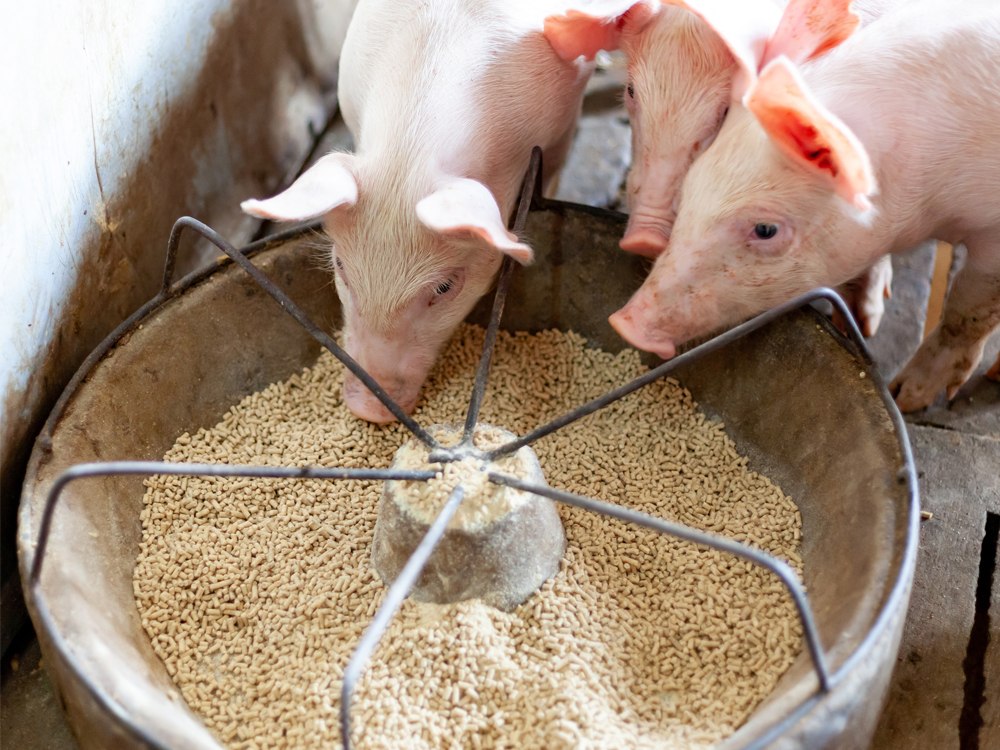
Villus Development: Enhancing Nutrient Absorption Surface Area in Broilers and Piglets
Restoring and expanding intestinal mucosal architecture is fundamental to optimizing livestock health and feed digestion. Targeted tributyrin for gut health supports mucosal delivery and intestinal function.
Epithelial Repair and Morphological Upgrade in Poultry and Swine
Targeted mucosal delivery of butyrate directly fuels enterocyte proliferation and barrier reinforcement.
- Villus Height Expansion: Sustained butyrate release stimulates mucosal cell division, increasing villus height and the villus-to-crypt ratio across the jejunum and ileum.
- Tributyrin Gut Barrier Function: Tributyrin supports gut barrier function by upregulating tight junction proteins (Claudin, Occludin), preventing leaky gut syndrome and endotoxin translocation.
- Rapid Cellular Energy Supply: Butyric acid serves as the primary energy substrate for colonocytes, accelerating tissue repair following inflammatory stress or pathogen exposure.
Application Scenarios Across Livestock and Aquaculture
Tailored inclusion strategies resolve specific production bottlenecks across diverse species sectors.
- Tributyrin for Poultry Feed: Early use of tributyrin for broiler chickens speeds up gut maturation, reduces wet litter, and boosts flock uniformity.
- Tributyrin for Piglet Gut Health: Adding tributyrin to post-weaning nursery diets eases weaning stress, curbs nutritional diarrhea, and stabilizes microbiota transitions.
- Tributyrin in Aquaculture Feed: In carnivorous fish and shrimp formulations, tributyrin in aquaculture feed protects hepatopancreas integrity and offsets enteritis triggered by plant-based protein meals.
Performance Metrics: FCR Improvement and Mortality Reduction
Evaluating tributyrin for animal nutrition relies on clear zootechnical parameters and economic returns for producers.
Quantifiable Zootechnical Enhancements
Replacing conventional salts with tributyrin generates measurable improvements in farm profitability metrics.
- Tributyrin and Feed Conversion Ratio: Improvements in feed conversion stem directly from heightened nutrient digestibility and enhanced enzymatic absorption surface area.
- Mortality Rate Reduction: Enhanced mucosal immunity and competitive exclusion of enteric pathogens lower overall flock and herd mortality rates.
- Synergistic Blending Solutions: Combining 99% tributyrin CAS 60-01-5 with complementary additives such as Glycerol Monolaurate (GML) or Medium Chain Triglycerides (MCTs) delivers broad-spectrum antibacterial protection.
Service Excellence and Supply Chain Optimization by Raize
As a trusted tributyrin feed additive supplier, Raize delivers end-to-end technical support and product optimization.
- Customized Product Formulations: Raize collaborates directly with premix manufacturers to develop bespoke additive blends tailored to specific customer specifications.
- Global Logistics Coverage: Exporting to over 30 countries across Europe, South America, the Middle East, and Africa, Raize ensures reliable supply chain continuity.
- Dedicated Merchandising Support: Experienced technical sales representatives provide tailored formulation advice and post-sale evaluation for animal nutrition enterprises.
Advanced Feed Nutrition Solutions Engineered by Raize
Transitioning from traditional butyrate salts to precision esterified tributyrin is a proven strategy for antibiotic-free animal production.

Elevating Animal Health and Farm Profitability
Partnering with a specialized chemical additive manufacturer unlocks consistent quality and economic value.
- Science-Backed Gut Integrity: Esterified tributyrin for gut health provides targeted intestinal delivery, superior thermal stability, and effective absorption.
- Direct Manufacturer Advantage: Raize provides high-purity feed solutions backed by flexible ordering, free trial samples, and comprehensive technical documentation.
- Take the Next Step: Станьте партнером Raize уже сегодня!to request your free 500g product sample or detailed technical documentation, and upgrade your feed formulas for superior animal performance.
Часто задаваемые вопросы
Q: How does tributyrin achieve targeted release in the intestine compared to sodium butyrate?
A: Tributyrin is a triglyceride ester that resists breakdown in the acidic stomach. It requires intestinal pancreatic lipase to cleave its ester bonds, ensuring sustained butyric acid release throughout the small intestine rather than premature gastric absorption.
Q: Why is tributyrin preferred for high-temperature feed pelleting and extrusion processes?
A: Unlike volatile butyric acid or coated butyrate salts that degrade under heat, esterified tributyrin exhibits high thermal stability, enabling it to withstand feed conditioning temperatures above 85°C without loss of active content.
Q: What are the typical application dosage rates for 99% tributyrin in poultry and swine diets?
A: Inclusion levels generally range from 200g to 1,000g per metric ton of complete feed, depending on animal age, health status, and production stage (e.g., starter broilers or post-weaning piglets).
Q: Can tributyrin be combined with other functional fat additives like GML or MCTs?
A: Yes, combining tributyrin with Glycerol Monolaurate (GML) or Medium Chain Triglycerides creates a powerful synergistic effect, simultaneously promoting enterocyte regeneration and broad-spectrum pathogen control against Gram-positive bacteria and enveloped viruses.


Оставить комментарий